Our breeds
Three breeds, one standard of care
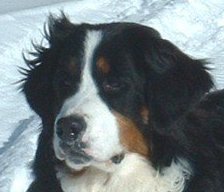
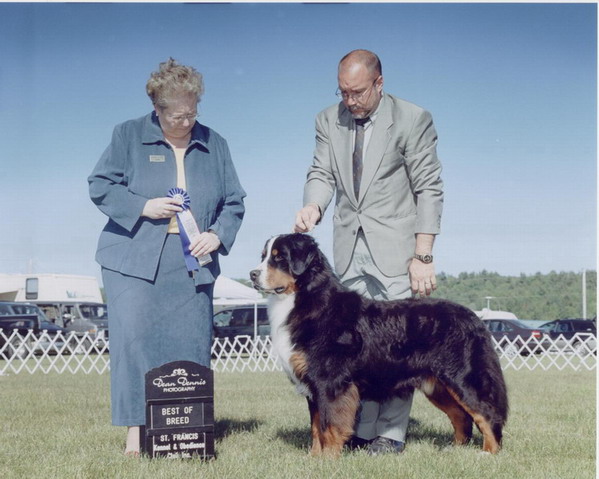
The Bernese Mountain Dog is the heart of the kennel, the Pembroke Welsh Corgi is our favourite discovery, and the Golden Retriever is the breed we started with in 1991. For each of them we put family temperament and health first.
Which breed suits you best?
| Feature | Bernese Mountain Dog | Pembroke Welsh Corgi | Golden Retriever |
|---|---|---|---|
| Size | Large (55-70 cm) | Small (25-30 cm) | Large (51-61 cm) |
| Adult weight | 35-50 kg | 10-14 kg | 25-34 kg |
| Coat | Long, tricolour, double | Short to medium, double | Long, golden, double |
| Temperament | Calm, steady, very affectionate | Lively, cheerful, very attached | Playful, willing, eager to please |
| Exercise needs | Moderate | Moderate to high (despite the size) | High |
| With children | Excellent | Very good | Excellent |
| Typical litter size | 4 to 9 puppies | 4 to 9 puppies | 6 to 10 puppies |
Please note: this information is indicative only. A dog’s temperament depends as much on training and socialisation as on its breed. We take the time to talk with every family before recommending a breed.
The gentle giant of the Swiss Alps
The Bernese Mountain Dog comes from the Berne region of Switzerland. Once known as the Dürrbächler, it was the versatile farm dog of the foothills: it pulled small milk carts to the village, guarded livestock and property, and lived day and night with its family. Those qualities are intact today.
It is a calm, steady and patient dog that adapts well to home life provided it can go out every day. It is particularly gentle with children, which explains its popularity with families. Deeply attached to its people, it copes poorly with long periods alone.
Like all large breeds, it needs responsible breeding: hips and elbows certified by the OFA, eyes tested through CERF, and selection based on the longevity of the bloodline. Our puppies are sold with a written guarantee against hip and elbow dysplasia and other hereditary illnesses.
Small dog, big personality
The Pembroke Welsh Corgi comes from Pembrokeshire in Wales. It was a herding dog: low to the ground, it could duck under cattle and drive the herd with small nips at the hocks while dodging hooves. Distinct from the older, longer-tailed Cardigan Welsh Corgi, the Pembroke is recognisable by its long body, upright ears and naturally short tail.
It is intelligent, alert and willing. It learns quickly, loves to work and happily joins in every family activity. Very close to its people, it follows them everywhere. Its herding instinct may lead it to “round up” family members, including nipping at children’s ankles — a behaviour to channel early.
Because it is a long, low breed, it is sensitive to repeated jumping and stairs. It is also a great food lover and prone to weight gain, so portions must be measured. We DNA test our Corgis for von Willebrand disease.
The breed that started it all
We began in 1991 with our first Golden Retrievers, acquired in co-ownership with Mr. Maurice Légaré of “L'Élevage Superbe des Savanes”. That is where we learned to read a standard, follow a bloodline, raise a litter and choose families.
The Golden Retriever is sociable, playful and very willing. Originally bred to retrieve waterfowl, it loves working with its handler. Its natural gentleness makes it an excellent family dog and a good candidate for therapy work. It needs to be included in family life: a Golden left alone too long can develop anxiety and destructive behaviour.
Our breeding programme today focuses mainly on the Bernese Mountain Dog and the Pembroke Welsh Corgi. For Golden Retriever enquiries, please write to us — we are glad to point you to trusted breeders.